“St Swithin’s Day, if it does rain, full forty days it will remain; St Swithin’s Day, if it be fair, for forty days, ’twill rain no more”
For most of the country this year, the sunny St Swithin’s Day promise certainly came true as we have experienced multiple heatwaves, droughts, and temperatures reaching or exceeding 35 degrees Celsius across May, June, July, August for the first time on record.
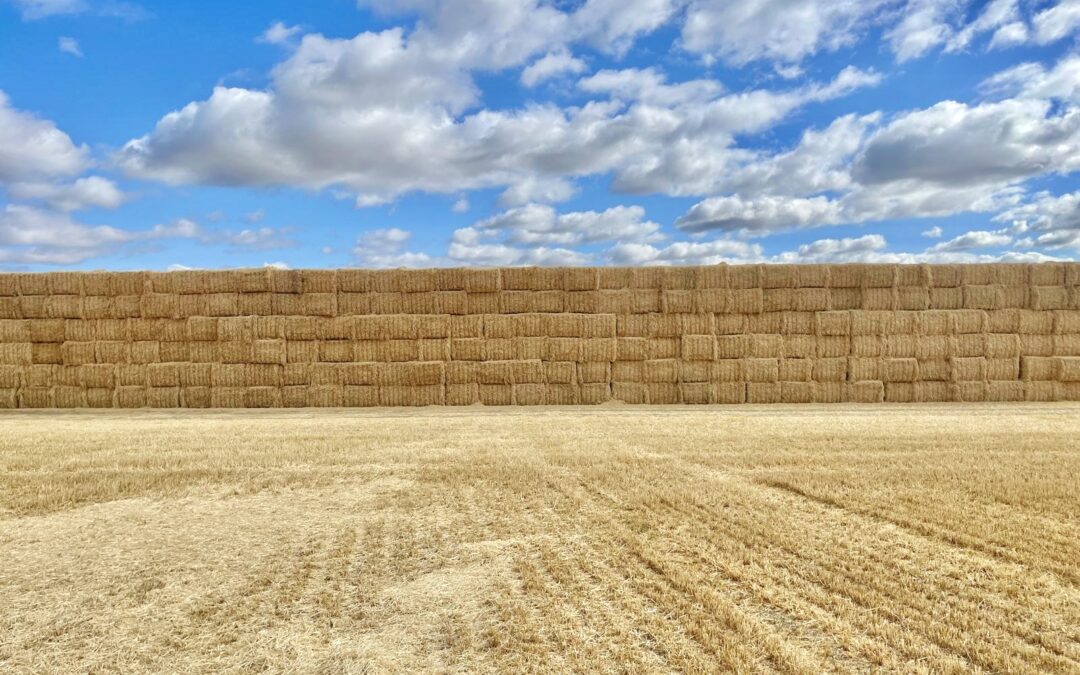
While what has felt like never-ending days of dry weather has certainly made for an logistically easier haymaking and harvest season, the lack of rain has naturally had an impact on crop quality – most noticeably straw is shorter and more broken up in the bale due to the dry conditions.
And while straw yields have reduced overall, wheat, winter barley and oil seed rape yields have been up on last year. Spring barley yields have been variable across the country, but are predominantly poor.
Delivered in prices of wheat, barley, oat and oil seed rape straw are at much the same level as this time last year, if not slightly higher, with wheat around £75-£85 per tonne ex-farm and barley at £100-£110 per tonne ex-farm. However, demand remains high, especially for barley straw.
In terms of future outlook, straw prices are likely to rise with stocks thought to be generally down throughout the UK.
While hay and silage are more abundant thanks to a wet start to the year resulting in heavy first cuts, demand remains strong with many farmers concerned about running short after last year. Hay prices have been inching up throughout July and August, currently around £100-£110 per tonne ex-farm, with many forced to start feeding winter stock early due to the lack of grazing.
The late August thunderstorms and torrential downpours are finally delivering some much‑needed relief from the country’s wildfire risk, and giving emergency services a welcome break from fielding calls about illicit BBQs. And of course, it all arrives just in time for that quintessentially soggy British bank holiday weekend.